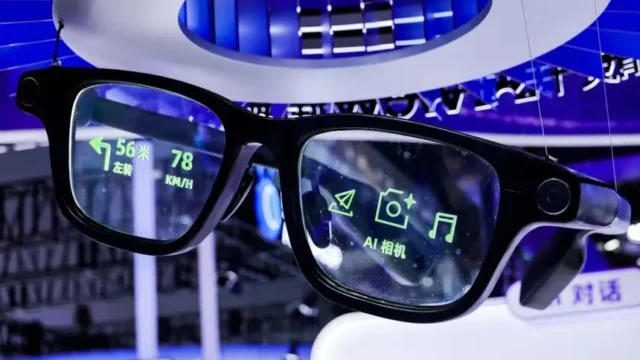
Snap’s answer to “why would anyone spend $2,195 on smart glasses” just got a lot more specific. The company behind Specs AR glasses announced new partnerships with Nvidia, Salesforce, and AWS this week, shifting its pitch away from consumer novelty and squarely toward businesses, factories, retail floors, and field service teams that need hands-free access to information on the job.
The Core Pitch: “A Computer, Not a Pair of Glasses”
Snap CEO Evan Spiegel has been blunt about what he’s actually trying to change here. “The goal with both Salesforce and Nvidia is to make it really easy for businesses to get the benefits of those agentic platforms,” Spiegel said, framing the broader mission as helping people understand that “Specs is a computer, not a pair of smart glasses for taking photos.”
That reframing matters because Specs, first unveiled in June at $2,195, sit far above what most people associate with smart glasses pricing. Meta’s competing glasses start at just $299 and accounted for roughly 76.1% of global smart-glasses sales last year. Snap isn’t trying to win that price war, it’s betting the higher price makes more sense once you stop comparing Specs to a camera-equipped accessory and start comparing it to a genuine workplace computing device.
What Each Partner Actually Brings
The three partnerships each cover a distinct piece of the enterprise puzzle:
- Salesforce is integrating its Agentforce platform directly into Specs, letting workers identify objects, log issues, pull up relevant data, and update workflows without ever switching to a separate screen or device
- Nvidia is bringing agents built on its open-source XR AI platform to the glasses, allowing Specs to interpret a worker’s physical surroundings and deliver real-time visual guidance based on what it sees
- AWS is connecting Specs to Amazon Quick, its workplace AI assistant, so employees can query inventory data and other business information hands-free, without breaking whatever task they’re already doing
Two additional, smaller partners round out the program: Tandem by Trifork, which connects on-site technicians with remote experts who can annotate what the technician is seeing in real time, and Hololight, which turns Specs into a spatial workstation for accessing documents, tools, and 3D models.
A Real-World Example
Snap’s own framing centers on a specific, practical use case, a field technician standing in front of a piece of equipment, pulling up digital repair instructions directly in their field of view rather than juggling a phone, a tablet, or a printed manual while their hands are already occupied with the actual repair. That’s the scenario Snap is betting will justify the price tag for business buyers in a way it hasn’t for casual consumers.
Snap’s Own Honest Timeline
Spiegel hasn’t been shy about tempering expectations either. Back in August, he said he doesn’t expect mass-market adoption of Specs “before the end of the decade,” a notably patient timeline for a device the company has already put more than $3.5 billion into developing. Specs are expected to begin shipping to US, UK, and French customers this fall, with a $2,395 package that adds a cellular-enabled charging case, and in-person demos starting in October at Westfield Century City in Los Angeles, with Verizon store demos to follow.
A Genuinely Tough Category to Crack
It’s worth being honest about the graveyard Snap is walking into here. Microsoft’s HoloLens and Meta’s own Quest headsets both failed to become mainstream hits despite years of investment and genuine engineering ambition, and Spiegel has pointed to bulkiness as the core reason those earlier devices struggled. Apple and Google are also reportedly developing competing AR devices of their own, according to Reuters, meaning Snap isn’t just fighting history, it’s racing well-resourced competitors circling the same space.
Snap hasn’t disclosed how many enterprise customers are actually committed to using Specs yet, or what revenue its new partnerships might realistically generate, meaning today’s announcement is a strategic pivot and a set of technical integrations, not yet a proof that businesses are actually buying in at scale.
The Bottom Line
Snap’s enterprise push for Specs AR glasses is a genuinely coherent strategy on paper, pair an expensive but capable device with three of the biggest names in enterprise software and cloud infrastructure, and go after a market segment that can actually justify the cost. Whether that translates into real commercial traction, rather than another well-funded AR device that impresses in a demo and struggles to find a genuine, lasting workplace, is the question Snap’s next few quarters will need to answer.
You can learn more directly from Snap’s official Spectacles page.
For more on how the smart glasses market is evolving globally, check out our coverage of China’s smart glasses sales doubling in 2026.