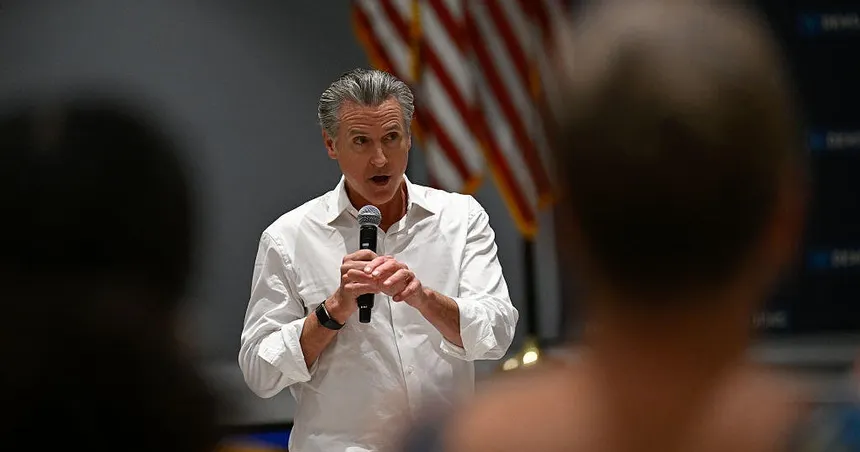
While Washington debates whether AI regulation is even necessary, California just decided it isn’t waiting around. Governor Gavin Newsom signed an executive order Friday, September 18, pushing to accelerate independent oversight of frontier AI models, including a proposal that sounds like it’s straight out of science fiction, a mandatory “kill switch” for the most powerful AI systems.
What the Order Actually Does
Newsom’s order convenes a group of “world-leading experts” tasked with delivering a concrete guide within two months for how California should strengthen its existing AI safety and security laws. According to the governor’s own office, the proposals under consideration include requiring independent third parties to write safety plans for frontier AI companies, and requiring those companies to build an emergency shutoff mechanism, the kill switch, for their most capable models.
Newsom didn’t mince words about the urgency behind it. “We’re not waiting to act, we’re going to speed up our work on substantial and responsible AI oversight before it’s too late,” he said in a statement. “We’re going to do this thoughtfully but with urgent velocity, the stakes are too high to wait or delay action.”
This Builds on Real Existing Law, Not a Blank Slate
It’s worth understanding this isn’t California’s first move here. Back in 2025, Newsom signed SB 53, the Transparency in Frontier Artificial Intelligence Act, the first AI safety law of its kind in the country, requiring frontier developers to publicly disclose their safety frameworks, report serious safety incidents to the state, and protect employees who blow the whistle on serious risks. Earlier in 2026, he signed SB 813, making California the first state to establish a formal framework for certifying independent organizations qualified to verify AI systems for safety, the same kind of independent verification concept now central to this new order.
Friday’s executive order is explicitly framed as building on and accelerating that existing legal foundation, not starting from scratch.
Why Newsom Says Washington Left This to the States
Newsom was direct about placing blame for the current regulatory gap squarely on the federal government. “The federal government’s abject failure to create any form of meaningful AI oversight or accountability should alarm every American, especially when AI CEOs themselves are begging for regulation,” he said. That’s a pointed reference to the same wave of safety warnings that’s dominated headlines this month, Anthropic researcher Jacob Coxon’s resignation, CEO Dario Amodei’s call for the industry to “pace the frontier,” and mounting incident disclosures from multiple AI labs.
Congress, meanwhile, appears unlikely to pass any meaningful AI legislation before the 2026 midterm elections, and President Trump has consistently resisted calls for federal regulation, with Nvidia CEO Jensen Huang emerging as one of the administration’s most visible allies arguing against new AI rules altogether.
California Isn’t Acting Alone
Newsom’s order landed on a day when state-level AI action was breaking out across the political spectrum. The same Friday, Virginia Governor Abigail Spanberger, a Democrat, signed her own executive order launching an AI task force and a data center accountability plan, citing concerns over workforce displacement, data privacy, and cybersecurity. Nevada Governor Joe Lombardo, a Republican, also signed a related order the same day, suggesting this isn’t purely a partisan split, multiple governors across party lines are moving on AI oversight in the same 24-hour window, independent of any coordinated federal push.
The Political Subtext
It’s hard to separate this move entirely from 2028 political positioning. Newsom is widely seen as a likely Democratic presidential contender, and he’s now part of a growing cluster of potential White House hopefuls staking out aggressive AI regulation as a signature issue. Whether that’s read as genuinely urgent policy leadership or as savvy timing ahead of a national campaign likely depends on who you ask, but either way, it puts California’s Democratic governor in direct, public contrast with the Trump administration’s more hands-off approach.
The Bottom Line
Newsom’s order doesn’t create binding law by itself, it sets a two-month clock for experts to hand back concrete recommendations, meaning the real test of how serious this gets will come once that guide lands in November. But paired with Virginia’s and Nevada’s same-day moves, and building directly on California’s existing SB 53 and SB 813 frameworks, this is a genuine signal that state-level AI regulation is accelerating in the vacuum left by federal inaction, kill switch and all.
You can read the full executive order directly from the Office of Governor Gavin Newsom.
For more on the safety warnings driving this moment, read our coverage of Dario Amodei’s call for AI labs to slow down and Jensen Huang’s pushback against AI doomsday concerns.